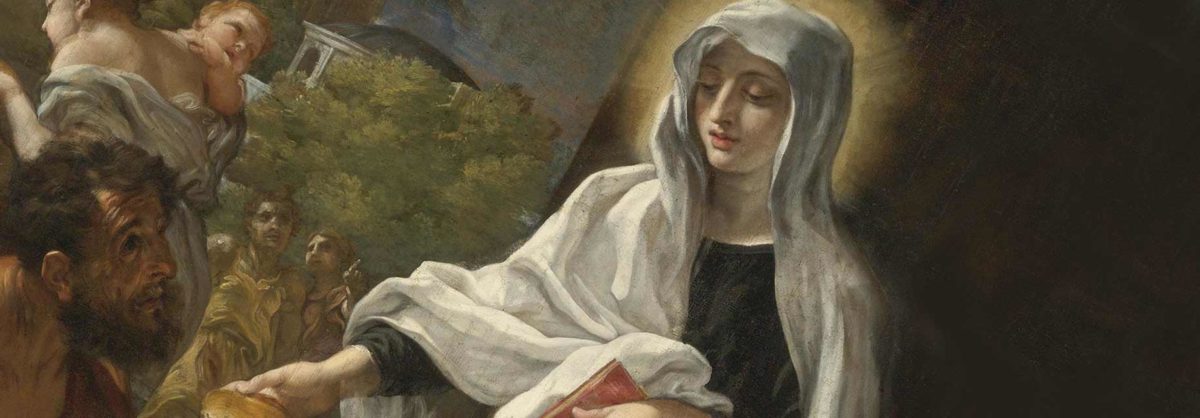

A primera vista, no hay dos mujeres más diferentes que Santa Isabel Ana Seton y Santa Francisca de Roma.
Lo único que tenían en común era que sus padres poseían cierta riqueza material y, por tanto, estaban bien conectados con la sociedad en general.
Más allá de eso, las mujeres se habían criado de forma diferente y tenían una naturaleza diferente. Eran verdaderos polos opuestos.
Frances era una 14th que había crecido soñando con un claustro y una vida tranquila de oración.
Elizabeth Bayley, nacida en 1774, era una fiel episcopaliana a la que, sin embargo, le encantaba bailar y asistir a actos sociales.
Frances’ family negotiated her marriage to Lorenzo Ponziani, a nobleman from a prominent family; the young woman actively sought to find a way out of the commitment and into the convent she believed she would prefer.
Elizabeth contrajo matrimonio con William Seton, de la célebre, bien relacionada y rica familia Seton, con gran alegría y entusiasmo. Era un verdadero matrimonio por amor, y a ella le esperaba una vida más bien previsible de hijos, obras de caridad y reuniones festivas, cómodamente instalada en la sociedad en la que tanto ella como su marido se habían criado.
Frances, una auténtica introvertida, sufrió un colapso físico y mental al intentar satisfacer las exigencias de su nuevo papel dentro de una familia juerguista y popular, y de la esfera expectante en la que funcionaban. Aunque se encariñó con su marido, odiaba su nueva vida.
Elizabeth, más hábil socialmente, cumplía con sus obligaciones tanto dentro de la familia como fuera, entre sus amigos, con gran energía y diversión.
Frances sufrió la muerte de todos sus seis hijos menos uno en la infancia.
Elizabeth tuvo cinco hijos sanos, aunque le dolió perder a dos cuando eran adolescentes.
Frances estuvo casada durante cuarenta años y cuidó a Lorenzo durante su última enfermedad.
Isabel enviudó a los 28 años, tras sólo nueve de matrimonio, tras lo cual se hizo católica.
Frances nunca entró en la vida religiosa. Elizabeth Ann Seton sí.
Sin embargo, a pesar de estas marcadas diferencias, las dos mujeres compartían un profundo compromiso con sus tradiciones religiosas y el amor por la oración. Ambas eran conscientes de la llamada a ayudar a los necesitados y respondían a ella.
Para la joven Frances, eso significaba contribuir con comida y ropa a los pobres, y ofrecer apoyo diario a través de la oración.
Para Elizabeth, al principio de su matrimonio, significó hacer rondas de caridad visitando a los pobres, y finalmente (irónicamente) convertirse en miembro fundador de una Sociedad formada para el alivio de las viudas con hijos pequeños.
Ultimately, their religious convictions drove both women to commit themselves more deeply to the service of others, expanding their outreach with every opportunity. Frances began by walking amid the poor and the hungry. Eventually, with her husband’s support, she practically invented the concept of “social work,” opening a portion of her own house to the sick and feeding the hungry from her own makeshift “soup kitchen.”
Elizabeth Ann Seton, cientos de años después, pensó en formas de ayudar a educar a los niños católicos desfavorecidos de familias pobres, entre otros.
Con el tiempo, ambas mujeres se convirtieron en fundadoras de comunidades religiosas que siguen existiendo hoy en día, cuyos miembros continúan sirviendo activamente a los demás y defendiendo los ideales de las mujeres notables cuyas nociones innovadoras y ejemplos han seguido.
Francisca creó una insólita comunidad de Oblatas Olivetanas de la Virgen María (ahora llamadas Oblatas de Santa Francisca de Roma), mujeres que viven y rezan en comunidad monástica pero no hacen votos, sino promesas en manos de una superiora benedictina. Sirven a la Iglesia atendiendo a los pobres en el corazón bullicioso de Roma, hasta nuestros días.
Mother Seton established the Sisters of Charity of St. Joseph, which sparked the first congregations of the Sisters of Charity, and would later became the first community of the Daughters of Charity in the United States. These Sisters created elementary and secondary schools – thereby virtually inventing the Catholic educational system in America – and built hospitals and orphanages (and prominently nursed soldiers on the battlefields of the Civil War) along the way.
We wonder how it can be that two such disparate women could end their lives in circumstances so far removed from their youthful realities, yet so similar in form to each other’s. Surely Frances, once married, never believed she would create a model of social service that would become common to the Church. Surely, Elizabeth – a popular society matron of “good Protestant” background – could not have considered that she would spend the greater part of her life alienated from her social circle and even from some members of her family as she embraced a life of endless work and service.
The answer may be to go back to the one common thing they both shared – a love of prayer, and the inclusion of times of prayer, contemplation and scripture study in their lives.
Both of them would have been familiar with St. Paul’s urgent advice to “Rejoice always, pray without ceasing, give thanks in all circumstances; for this is the will of God in Christ Jesus, for you.” (1 Thess 5:16-18).
Apparently both Frances and Mother Seton took his words to heart, and that is remarkable when we consider that they are not “easy” words.
De hecho, son palabras que exigen voluntad de confiar that no matter what is happening in one’s life, God has a plan for each of us, if we will only say “yes” in the good circumstances, and “yes” in the challenging ones, as well. And that is hard, hard work, because it’s easy to rejoice, to give thanks and find the will of God in what meets our dreams and expectations.
It’s incredibly difficult to do so, however, when those dreams, those expectations, are irretrievably shattered, and it feels like we are left with no good options before us, nothing firm on which to rely.
In essence, what St. Paul insists is that God is the consistent good option – the firm Being upon whom we may always depend, if we will only believe that his purposes are always for our benefit – and that we will discover the truth of it if only we’ll say “yes” when we want to say “no”, and do so with grateful and trusting hearts.
That is essentially what two remarkable women did over the span of centuries. Their lives give eternal testament to the gracious reality of Paul’s promise.
La prueba puede estar en algo que escribió la propia Madre Seton: “We must pray without ceasing, in every occurrence and employment of our lives—that prayer which is rather a habit of lifting up the heart to God as in a constant communication with Him.”
It’s good advice. There is greatness to be ground out of us with our every humble and obedient “yes” to what is before us, if we can only cast aside our fears and say the word, as did these great women who have helped show us the way.
Santa Francisca de Roma, St. Elizabeth Ann Seton, ora pro nobis.
ELIZABETH SCALIA es el galardonado autor de Dioses extraños, desenmascarar a los ídolos de la vida cotidiana y Little Sins Mean a Lot: Kicking Our Bad Habits Before They Kick You.
Imagen: Francisca de Roma dando limosna, Giovanni Battista Gaulli, (1639-1709).
Esta reflexión se publicó anteriormente. Pulse aquí para ver todas nuestras Reflexiones Seton.