
Elizabeth Ann Seton teaches us that “Jesus is as a fire in the very center of our souls ever burning. Yet, we are cold because we do not stay by it.”
Pero, ¿cómo vamos a encontrar a Jesús allí, en el centro de nuestras almas? ¿Y cómo guarda nosotros mismos cerca de ese fuego interminable?
Elizabeth would say without hesitation that the secret to staying close to Jesus is prayer. And prayer is nothing more than a “look of love”: “Our look of love at Him draws back a look of love on us, and His divine love enkindles that fire of love in us which makes us remember him continually.”
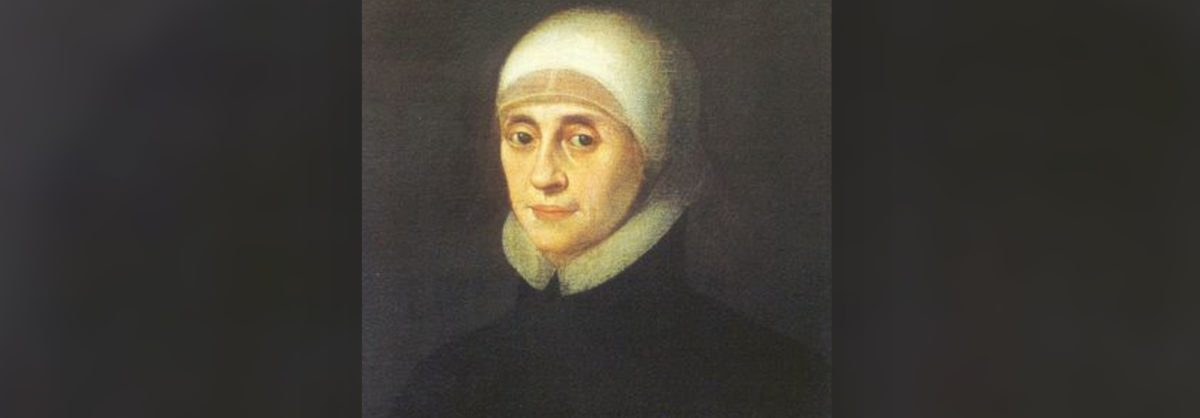
Among Elizabeth’s sisters in sanctity, the woman saints of our Catholic tradition, few have been drawn into the fire of divine prayer as was Venerable Mary Ward.
Mary was born in 1585 into a family of English “recusants,” Catholics who had refused to embrace the new church that was created in 1534 when King Henry VIII separated England from the authority of the Roman Catholic Church. In the years that followed, Henry’s government dismantled the shrines of the saints, dissolved the monasteries, and punished all who refused to participate in the worship services of the Church of England with fines and imprisonment. Shortly before Mary was born, a law was passed that made it a crime punishable by death to be a Catholic priest in England. And it was an equally serious crime to help or harbor one.
Sorprendentemente, las persecuciones que intentaron acabar con los católicos ingleses que quedaban sirvieron para intensificar y profundizar su fe. Los católicos perseguidos vivían una bendita codependencia: los sacerdotes atendían a los laicos que se sacrificaban para alimentarlos y darles cobijo, y los laicos atendían a los sacerdotes que les enseñaban y les llevaban los sacramentos. Y en el centro mismo de esta comunión en el sufrimiento estaban los laicos mujeresde casas grandes y pequeñas, que acogían a los sacerdotes y facilitaban las misas secretas en sus hogares.
El mismo año en que nació María, una mujer de Yorkshire, Margaret Clitherow, fue arrestada por esconder sacerdotes en su casa. Margaret no quería que sus tres hijos testificaran contra ella (o fueran torturados), por lo que se negó a declararse culpable, evitando así el juicio. Las autoridades respondieron condenándola a muerte: la presionaron hasta la muerte bajo una enorme puerta de madera sobre la que amontonaron una tonelada de piedras. Margaret estaba embarazada de su cuarto hijo. Sin embargo, fue valientemente a la muerte, galvanizando el coraje de los que vinieron después de ella.
Mary Ward was one of those who drew strength from Margaret’s witness, and it meant she clung ever more to Jesus. When the young Jesuit mission priests introduced her to contemplative prayer, that became a source of undeniable strength.
Mary learned that prayer of which Elizabeth Ann Seton spoke, the “affective prayer” that seeks intimacy with Christ. She entered imaginatively and personally into the scenes of Christ’s earthly life, seeking in her meditations to sit at his feet, or huddle next to him in the bottom of the boat, or stand with Mary at the foot of His cross. In prayer, she was drawing close to Jesus, listening to him, and talking familiarly with him. And in this way, Mary began to know with certainty that she was wanted and loved. She became alive to the Lord’s work in her life, and she wanted to give herself freely to that work.
A la tierna edad de quince años, María discernió una vocación religiosa y convenció a su padre para que la dejara ir a las Clarisas en Holanda. No estuvo allí mucho tiempo, sin embargo, antes de darse cuenta, a través de la oración, de que estaba en el lugar equivocado. Regresó a Inglaterra y comenzó a servir a los católicos perseguidos, catequizando a los niños y visitando a los presos.
Mary was in the midst of this work when one day she had an extraordinary experience in prayer that she called her “glory vision.” In this overwhelming experience of the Lord’s presence she sensed that she was called to something “more to his Glory.” Soon she returned to the Netherlands to discern the path.
Two years later Mary received another definitive illumination in prayer: “take the same of the Society.” This time, Mary knew exactly what was being asked of her: she was to found a new order for women based on the same Constitutions that Ignatius of Loyola had written for the Society of Jesus.
María fue llamada a reunir a las mujeres en una comunidad activa y contemplativa, centrada en la oración. y ordenada a la acción mundana. Se imaginaba a las mujeres sirviendo como ella había servido en Inglaterra: catequizando a los niños, visitando a los presos y evangelizando a los demás en las conversaciones cotidianas. Estarían enraizadas en la oración, pero libres para la misión: y la misión sería apoyar a las almas en circunstancias difíciles. Se sintió llamada a responder a las mismas necesidades que había visto en sus compatriotas perseguidos.
Y esta llamada fue algo totalmente nuevo. At this time in the Church’s history no religious women were permitted to pursue apostolic works. Women were to remain “in enclosure” in convents. But, certain of what she had received in prayer, Mary went to Rome to seek papal approval. At first, she was given leave to open a few houses and schools in Rome and elsewhere in Italy. But within only a few years resistance began to mount against her and the women who had joined her. Eventually, Mary’s case was brought to the Inquisition, and because Mary refused to accept enclosure for her nuns and continued to insist on a woman superior (another innovation), she was declared a heretic.
Mary calmly accepted all that came with this charge: the suppression of her houses, the scattering of her first followers, and her own imprisonment in a cramped cell. In 1632, she was summoned to Rome to answer the charges. In a meeting with the pope, she declared, “Holy Father, I neither am, nor ever have been a heretic.” “I believe you,” the pope told her. Nevertheless, she was told to remain in Rome and refrain from living in community. Eventually, her health deteriorated, and she was permitted to return to England where she died in 1645.
At Mary’s death, nothing remained of the Institute she had founded—except for her vision for serving the Church in the way that the Lord had revealed to her in prayer, and the few followers to whom she had confided this wish. These women continued where Mary had been forced to leave off, and two separate congregations slowly took shape, working without official recognition until 1877, when they were approved by the Church.
Sin embargo, no se les permitió reconocer a María hasta 1909, cuando fue reconocida como fundadora del Instituto de la Santísima Virgen y de la Congregatio Jesu. Y sólo en 2002 se permitió por fin a estas mujeres tomar como propias las Constituciones de la Compañía de Jesús.
For over three hundred and fifty years Mary’s foundations persevered, their foundress all but forgotten. Such was the power of Mary’s prayer. Such, we must admit, is the power of prayer.
Elizabeth Ann Seton habla por todos los santos cuando profesa: Jesús es el centro ardiente. Acercaos a Él. María da testimonio de lo mismo: Jesús es el centro ardiente. Acércate a él.
LISA LICKONA, STL, is Assistant Professor of Systematic Theology at Saint Bernard’s School of Theology and Ministry in Rochester, New York, and a nationally-known speaker and writer. She is the mother of eight children.
Esta reflexión se publicó anteriormente. Pulse aquí para ver todas las Reflexiones Seton.
Imagen: Dominio público