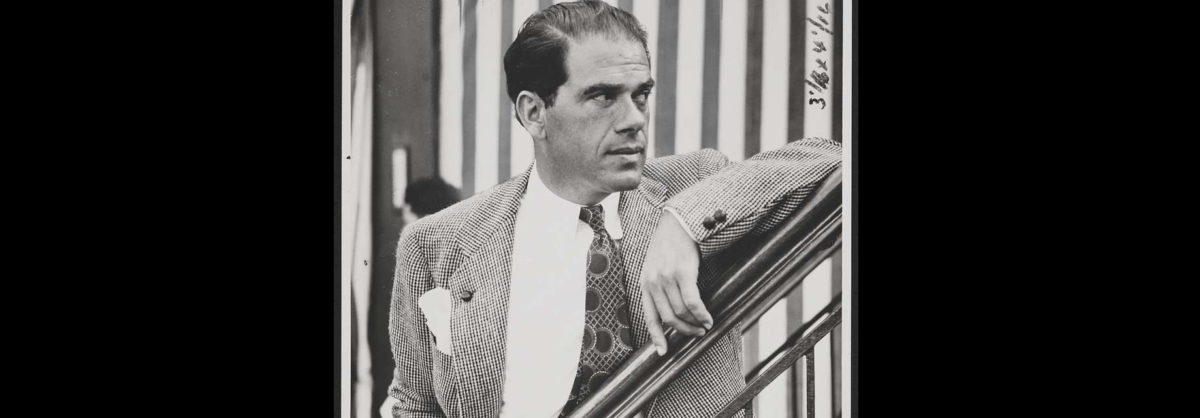

What could the film director Frank Capra and the saint Elizabeth Ann Seton possibly have in common? A great deal, in fact. They were both thoroughly American, but more important, the storylines of Elizabeth’s life and Capra’s films each illustrated the key themes of the Christian drama: the Cross, Christ’s Resurrection, trust in God’s Providence, and the theme I’ll explore here—the blessedness of the poor and meek.
Several of Capra’s films focus on the plight of the “little guy”— and often the evils of the powerful rich. Think of his most famous film, Qué bello es vivir (1946), donde el malévolo barón ladrón Henry Potter es burlado por el relativamente pobre pero generoso George Bailey. Incluso una de las primeras películas sonoras de Capra, Rubio platino (1931), presenta a un tipo corriente, el reportero Stewart Smith, que se ve atraído por el mundo de la clase alta (que aquí no es malvada, sólo ostentosa), pero que luego lo rechaza disgustado por su esnobismo y su egoísmo inherente.
Pero quiero centrarme primero en una de las películas de Capra de la época de la Depresión: El Sr. Deeds va a la ciudad (1936). Longfellow Deeds es un hombre corriente de veintiocho años del pueblo ficticio de Mandrake Falls, Vermont, donde es muy querido. Sus placeres: tocar la tuba y escribir poesía por encargo de una empresa de postales navideñas. De la nada, aparece el sórdido abogado John Cedar con la noticia de que Deeds es el único heredero de una fortuna de 20 millones de dólares que le ha dejado un tío al que apenas conoce. Deeds le contesta, despreocupado: "Me pregunto por qué dejó me todo ese dinero. No lo necesito". Luego coge su tuba y toca unas notas. Cedar, tratando de conseguir un poder notarial sobre la herencia (y llevarse una gran comisión para él), dice a Deeds que debe acompañarle a Nueva York. En el tren, en lugar de pensar en todo lo que puede hacer con el dinero, Deeds se preocupa por dónde encontrará la banda del pueblo otro tubista.
En Nueva York, a la periodista Louise Bennett se le ocurre la idea de hacerse pasar por una pobre forastera que intenta conseguir trabajo; haciéndose llamar Mary, interpreta este papel con Deeds para ganarse su confianza, salir con él y luego escribir artículos burlándose de él como si fuera un paleto. A su editor le encanta lo que hace porque sus artículos venden muchos periódicos. Por supuesto, Deeds no tiene ni idea de quién está escribiendo estas humillantes historias, y poco a poco se va enamorando de ella, y ella de él.
Though “as naive as a child” (as Cedar puts it to his colleagues), Deeds is sharp enough to catch on to all the New York rich folks who are trying to get hold of a chunk of his inheritance. (Of Cedar, he says after they’ve shaken hands, “Even his hands are oily.”) He just wants to go back to Mandrake Falls—so he can think about what good he could do with the money—especially after he discovers that it’s “Mary” who has been writing the demeaning newspaper stories.
But just then, at his lowest ebb, a poor man barges into the garish mansion where Deeds is living and berates him for wasting his money: “I want a chance to feed my wife and kids. I’m a farmer but I lost my farm. You never gave a thought to all those starving people waiting in bread lines—not knowing where their next meal is coming from.” (Remember, the film is set during the Great Depression.)
La película cambia inmediatamente a los titulares de los periódicos: "Longfellow Deeds regalará su fortuna"; "Enorme distrito agrícola se dividirá en granjas de 10 acres totalmente equipadas a un coste de $18.000.000"; "Miles de parados asaltan la casa de Deeds".
A continuación vemos a Deeds, sin afeitar y en mangas de camisa, examinando a la multitud de aspirantes a sus granjas. Pero de repente, durante esto, es arrestado por locura (una estratagema urdida por Cedar). El tribunal accede a celebrar una vista; al fin y al cabo, nadie que regale $18.000.000 a personas sumidas en la pobreza puede estar cuerdo.
At the hearing, Deeds refuses counsel and refuses to speak at all when addressed by the judge. So the prosecution (Cedar) holds all the cards, even using Louise to testify unwillingly against Deeds. But just when the judge is about to declare that Deeds is indeed insane and must be committed to a mental hospital, Louise stands up shouting “No! No! No!” Re-taking the stand, she confesses her part in falsely portraying him as a crazy fool. She also admits her love for him. Hearing this, Deeds begins to speak eloquently in his own defense and even gives Cedar a punch in the face for good measure. The farmers filling the courtroom cheer Deeds, and the judge declares “In the opinion of the Court, you are not only sane—you are the sanest man who ever walked into this courtroom. Case dismissed.” The movie closes with Deeds sweeping Louise into his arms with a kiss.
Cinco años más tarde, Capra rodó una película en la que su preocupación por los pobres adquiere una dimensión cristiana: Conozca a John Doe (1941). Newspaper columnist Ann Mitchell invents a “John Doe”: an ordinary man who’s going to commit suicide by jumping off the City Hall roof on Christmas Eve in disgust at society’s disregard for people in need. Ann’s fake story captures the popular imagination, so her boss decides to keep it going by finding a “real” John Doe. They choose ragged, beaten-down John Willoughby. Ann writes for him a national radio speech which includes: “You’re probably thinking: ‘I’m just a little punk. I don’t count.’ But you’re dead wrong: … the character of a country is the sum total of the character of its little punks. So look out for your neighbor: if he’s hungry, feed him. The meek can only inherit the earth when the John Does start loving their neighbors.”
Tras esta primera alusión evangélica, hay más. Inspirados por el discurso radiofónico de John, surgen "Clubes de John Doe" por todo el país. En su primera convención nacional, John apenas ha empezado a hablar cuando el villano de la película (por supuesto, un hombre rico y corrupto) hace que unos repartidores de periódicos repartan un periódico que dice "John Doe es un farsante". La gente empieza a abuchear a John y a tirarle cosas, mientras Ann grita: "Le están crucificando".
Then in the film’s finale, John, thoroughly disillusioned about any good he can do, is indeed on the City Hall roof on Christmas Eve. Ann, by now in love with him, dashes to the roof to stop his suicide. Throwing herself in his arms, she cries: “You don’t have to die to keep the John Doe idea alive. Someone already died for that once. The first John Doe. And he’s kept that idea alive for nearly 2,000 years… and he’ll go on keeping it alive forever and always.” John silently lifts her in his arms and walks away from the edge of the roof.
Estoy bastante seguro de que Elizabeth Ann Seton habría encontrado en la visión de Capra de los pobres y necesitados un reflejo de la suya propia.
While still a Protestant in her early twenties, Elizabeth showed her compassion for people in need by joining the newly formed Society for the Relief of Poor Widows with Small Children—one of the nation’s first female-run groups devoted to charitable works. The Society raised funds for families in need and helped them to find housing and educate their children. As Mother Seton, Elizabeth led the community she founded, the Sisters of Charity of St. Joseph’s, in educating the poor, caring for the sick, and feeding and clothing orphans. As news of the good work of her Sisters spread, Elizabeth received a request to run a Philadelphia orphanage. She sent three Sisters on this mission, and the orphanage thrived. Because of the Sisters’ success in Philadelphia, Seton received a similar request to set up an orphanage in New York City, and she responded by sending three Sisters.
I love that a mid-twentieth century immigrant film director and an early-nineteenth century saint born into Manhattan’s elite have something so important in common. But maybe that’s not surprising since their concern for society’s poor and outcasts was grounded in their Catholic faith.
PEGGY ROSENTHAL es doctora en Literatura Inglesa y ha publicado numerosos libros y artículos sobre la intersección entre poesía y espiritualidad.
Haga clic en aquí para leer todos los ensayos de Seton & Culture.
Imagen: Dominio público