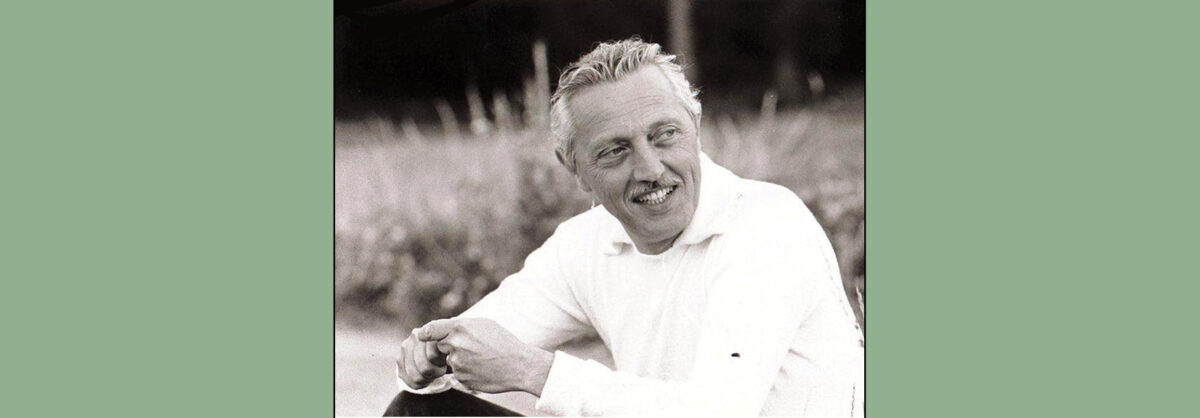
In the prime of their lives, Elizabeth Ann Seton and the geneticist Jerome Lejeune each faced a life-changing question: What to do when following your conscience means losing friends, social position, and in the case of Lejeune, the highest honors for your life’s work?
It’s a choice every Christian faces to some extent, but some are asked to give everything: Martyrs decide to give their lives; Jerome Lejeune and Elizabeth Seton sacrificed their livelihoods and reputations.
Como Mother Seton, Venerable Jerome Lejeune started out living a comfortable life, according to society’s standards.
Elizabeth Ann Bayley nació en el seno de una acomodada familia episcopaliana de Nueva York y se casó en la acomodada familia Seton. Ella y su marido tenían cinco hijos cuando falleció William Seton.
Poco después, Isabel se encontró con la innegable verdad de la Iglesia católica, en particular la Eucaristía. Se enfrentó a una difícil elección.
Podía negar su conciencia y permanecer en la Iglesia Episcopal, con toda la comodidad y el apoyo de sus amigos de toda la vida y de su comunidad.
O podía seguir a su conciencia en una vida nueva e incierta como viuda convertida a la fe católica.
Elizabeth chose her conscience. So did Jérôme Lejeune.
Nacido en un suburbio de París en 1926, Lejeune estudió medicina y se convirtió en investigador del Centro Nacional de Investigación Científica francés, alcanzando fama mundial por sus trabajos sobre los efectos de la radiación atómica en 1952.
Six years later, Lejeune’s major breakthrough occurred.
Mientras estudiaba muestras de tejido de un niño con síndrome de Down, Lejeune hizo un descubrimiento crucial.
Human beings have 23 pairs of chromosomes—46 in total. He and research partner Marthe Gautier discovered that patients suffering from what was then known as “mongolism” had an extra chromosome in the 21st pair.
Lejeune named the condition “Trisomy 21” and sought ways to cure or provide compassionate care for these patients and their families.
Aude Dugast, the postulator for Lejeune’s cause, said, “He loved his patients. There were so many mothers who said they were very moved when they met him the first time and Lejeune looked at their son or daughter, and they saw that he looked at them with so much love in their eyes that they were very surprised, because he was a very famous professor.”
For many, she added, “It was the first time they saw someone who was full of love for the child, and each time it was a new start for the family.”
Honors poured in for Lejeune’s groundbreaking work. In 1962, President John F. Kennedy awarded him the Premio Kennedy. En 1964, la prestigiosa Facultad de Medicina de la Universidad de París creó una cátedra especial para él.
Más tarde, en 1969, su trabajo fue reconocido con el premio William Allen Memorial de la Sociedad Americana de Genética Humana, la más alta distinción disponible para un genetista.
But Lejeune’s acceptance speech for the award would change everything.
Lejeune had seen—to his horror—that his discovery had an unintended tragic consequence.
Al poder identificar la trisomía 21 antes del nacimiento, los médicos empezaron a realizar pruebas a los niños no nacidos para detectar la enfermedad, lo que permitía abortar a los que daban positivo.
Dr. Pilar Calva Mercado, who studied under Lejeune in the 1980s, remarked, “I didn’t go to him because he was very Catholic, but because he was very good at clinical genetics.”
Pero una vez que conoció a Lejeune, sus convicciones éticas influyeron profundamente en ella.
“When he told me why he wouldn’t do prenatal diagnosis, it convinced me,” dijo reporter John Burger. “He told me he could not collaborate with a death sentence… When one cannot do anything to cure a sickness, you have to work more to relieve the suffering, but not to kill the patient. That was something that completely changed my mind.”
Lejeune expressed the same viewpoint to the American Genetics Society during his acceptance speech. “Should we capitulate in the face of our own ignorance and propose to eliminate those we cannot help?” he asked in his speech. “Our duty has always been not to inflict the sentence but to try to commute the pain.”
The remarks were not well received. That night, he wrote to wife, “Today I lost my Nobel Prize.”
Lejeune tenía razón. La respuesta a su valiente postura fue rápida y dura.
Mark Bradford, the Venerable Jérôme Lejeune Fellow at the Word On Fire Institute, described the fallout:
“The confrontations Lejeune had with the cultural elites of his time were brutal and they severely punished him personally, professionally, and financially,” he said. “Even his young children weren’t unscathed. One day walking home from school they saw spray painted on a wall, ‘Dr. Lejeune and his little monsters must die!’”
Lejeune respondió con entereza y perseverancia, dedicándose con aún más pasión a sus pacientes, su investigación y su fe.
Le siguieron otros descubrimientos e innovaciones. En la década de 1980, Lejeune fue elegido miembro de la Academia Francesa de Ciencias Morales y Políticas y de la Academia Nacional de Medicina, y en 1993 recibió el Premio Griffuel por sus decisivos trabajos sobre las anomalías cromosómicas en el cáncer.
As science advanced, Lejeune intensified his defense of human dignity alongside the Catholic Church. Calva recalls that he would “take these mysterious trips” to Rome. In 1974, he became a member of the Pontifical Academy of Sciences. 20 years later, in 1994, Lejeune died from cancer, weeks after his nomination as the first President of the Pontifical Academy for Life.
St. Elizabeth Ann Seton’s reaction to opposition offers the same lesson.
Many friends and family members were aghast at the newly widowed mother’s decision to convert to Catholicism.
Elizabeth respondió con alegría y honestidad, dedicando sus talentos de todo corazón a su vocación, convirtiéndose finalmente en una fundadora religiosa y pionera del sistema de escuelas parroquiales de Estados Unidos.
Murió con palabras de devoción en los labios, al igual que Lejeune.
Lejeune remained devoted to his Down Syndrome patients to the end of his life. “I was the doctor who was supposed to cure them, and now I am leaving,” he lamented. “I feel like I am abandoning them.”
But he wasn’t. He died on Easter Sunday, celebrating the One who gave everything in surrender to the Father, whose Resurrection reveals that God never abandons us.
Lejeune’s life, like Mother Seton’s, teaches the lesson that the honors that ultimately matter come from God.
TOM HOOPES, autor más reciente de El Rosario de San Juan Pablo II, es escritor residente en el Benedictine College de Kansas, donde imparte clases. Es anfitrión de La extraordinaria Story podcast sobre la vida de Cristo. Su libro Lo que dijo realmente el Papa Francisco ya está disponible en Audible. Antiguo reportero en la zona de Washington, D.C., fue secretario de prensa del Presidente del Comité de Medios y Arbitrios de la Cámara de Representantes de los Estados Unidos y pasó 10 años como editor del periódico National Catholic Register y de la revista Faith & Family. Su trabajo aparece con frecuencia en el Register, Aleteia y Catholic Digest. Vive en Atchison, Kansas, con su esposa, April, y tiene nueve hijos.
Imagen por cortesía de la Fundación Jerome Lejeune EE.UU.
Pulse aquí para ver todas nuestras Reflexiones Seton.