
When I was first raising my babies, twenty-something years ago, I was drawn to the practice of “attachment parenting.” The basic assumption of this parenting approach is that a baby is happiest when he is close to his mom. One of the tenets of attachment parenting is “wearing” your baby swaddled in a baby sling or carrier — and I totally embraced it.
A lo largo de muchos años de crianza de mis hijos, he gastado numerosos fulares portabebés de todos los colores y estilos. Las fotos de familia me muestran llevando a nuestros bebés en todo tipo de circunstancias: lavando los platos, de excursión, montando en barca, escardando el jardín.
And I have to be honest. I don’t know if this practice made my babies happier than any other babies. but I can tell you one thing: it made me feliz. Me hacía increíblemente feliz tener a mis pequeños tan cerca. Y ese era el tipo de felicidad que invariablemente se contagia a los demás. Mi felicidad hacía felices a mis bebés. Mi alegría se convirtió en su alegría.
Hoy en día, no tengo más bebés. Y ahora mismo no tengo ningún deseo de llevar a nadie a cuestas. Pero debo admitirlo: Quiero para llevar. This year has made me feel like a helpless child. “Someone come quick,” I want to cry, “sweep me up and hold me close to your heart!” I want a mother’s consolation, a tenderness I can feel, that warmth that radiates out from her happy center. I want Mary.
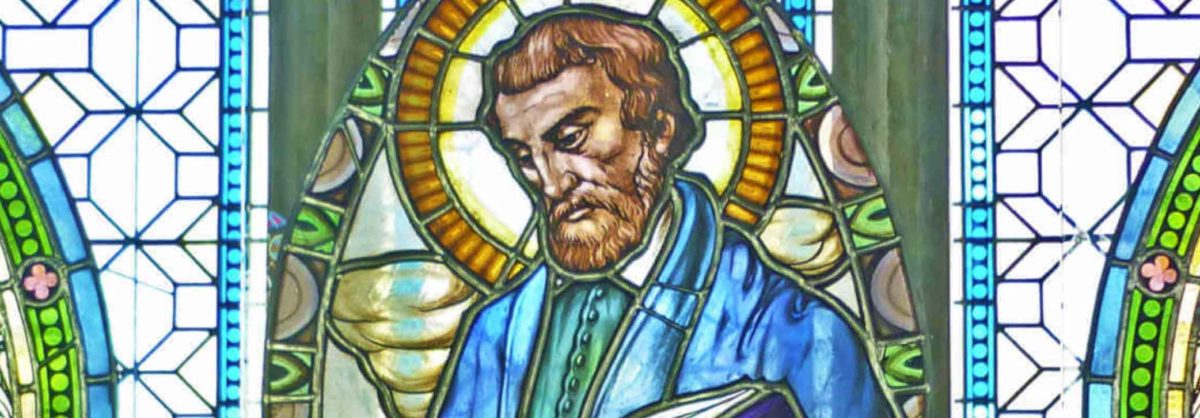
En esto, estoy en buena compañía. Los dos santos que hoy nos ocupan, Pedro Canisio e Isabel Ana Seton, se apoyaron en la Madre de Dios para superar sus dificultades. Sacaron fuerzas de su ternura y se sintieron animados por su cercanía. Y, de este modo, marcan un camino a seguir para todos nosotros en tiempos oscuros.
At first blush, the two seem so different. Elizabeth was an eighteenth-century, American woman, a convert, mother, widow, and religious sister. She founded a teaching order, the Sisters of Charity, in rural Maryland. Peter was a fifteenth-century, Dutch-born Jesuit priest. He is credited with almost single-handedly saving the Catholic faith in southern Germany after the Protestant Reformation through his preaching, teaching, and work of founding educational institutions. A gifted writer, Peter created three catechisms that formed the backbone of post-Reformation education in Germany — one of the reasons he is lauded as a Doctor of the Church.
Pero por muy diferentes que parezcan, Pedro e Isabel compartieron una pérdida y un amor similares: ambos habían experimentado la muerte prematura de una amada madre terrenal. Y ambos fueron recogidos después en los brazos de la Madre de Dios. Ella los llevó junto a su corazón, envueltos, por así decirlo, en el manto de su amor (su versión del fular portabebés). En los momentos más difíciles, cuando la vida se volvía desesperada y difícil, tanto Pedro como Isabel se volvían instintivamente hacia María, alzándole los brazos en oración. Pidieron ser llevados en brazos.
Uno de esos momentos fue su primera visita a Viena: su segunda misión en tierras germanas y quizá la más difícil. En de facto capitol of the Holy Roman Empire, the spiritual and cultural center of Europe, Vienna was reeling from the confusion that resulted from Martin Luther’s break with the Church. Religious battles had torn families and communities apart. Some people became Lutherans; others clung to the Catholic faith. But many more, disillusioned, fell from the practice of religion entirely or reverted to pagan practices. Monasteries were deserted and universities shuttered. Many churches had no pastor, and those that remained were utterly disheartened. When Peter arrived in Vienna, there had not been a priestly ordination in the city in 20 years.
Y Pedro pensó que sabía qué hacer: ¡Él enseñaría! Predicaría. Convertiría la herejía en fe. Y así, fue a las iglesias y comenzó a evangelizar. Pero nadie vino. Nadie estaba allí para escuchar. Los vieneses habían terminado con la iglesia.
Así que Pedro retrocedió, se reagrupó y rezó. Y entonces cambió completamente su táctica. En lugar de anunciar el Evangelio, se convirtió en el Evangelio. Buscó a los pobres y a los indigentes. Ejerció su ministerio en los hospitales. Y frecuentaba las cárceles, donde encontraba a los condenados a muerte, se quedaba con ellos y rezaba con ellos hasta el amargo final.
Pedro Canisio acercó a los vieneses a su corazón y éstos empezaron a sentir su calor. Concibieron afecto por este hombre que abrazaba a los perdidos y abandonados. Querían oír su predicación; escuchaban sus palabras. Y este fue el comienzo de la reevangelización de Viena. Pedro no volvió a ganar a esta gente para la fe con doctrina, sino con ternura. Los ganó a través del apego.
Where did such tenderness come from? What was the secret of Peter’s strength? The simple answer is that Peter was drawing strength from the heart of his Mother. He was radiating to others that same love he felt from Mary. He was sharing her joy.
In all his labors, Peter relied utterly on the Mother of the Lord. He founded sodalities to Mary everywhere he went — and he told them that prayer to Mary, more than anything else, would ground the re-emergence of the faith in their land. The more they entrusted themselves to her, the more she would help them.
Peter spoke from his own experience. He had been loved. He had been carried. Late in life, as a witness to it, he wrote a book for Mary, his “poor testimony” to his “most August Queen, most true and faithful Mother Mary.” It ran to 800 pages.
Elizabeth Ann Seton knew this same love. And like Peter, she came to it by relying on Mary in the most difficult moments. Elizabeth was an Episcopalian when she met the Catholic faith in Italy. And despite all that she had been taught about avoiding the “worship” of Mary, she was drawn by the mother of God whom she saw honored in the art and the architecture and in the simple pious faith of her Catholic friends. Elizabeth was so moved by this that she herself began to turn instinctively to Mary. When she faced the most important decision of her life, whether or not to convert to the Catholic faith, she threw her arms open to the Mother of God.
For months, Elizabeth had been wavering between the Episcopal faith of her upbringing, which had brought her much joy, and the strange and wondrous new Catholic faith that she had found in Italy. She felt the burden of the choice for herself and her children. What if she made the wrong decision? Would she be damned, and her children with her, for remaining outside the true Church? Even as Elizabeth remained on the razor’s edge, unable to come down on the side of either, she wrote to her Catholic friend Amabilia of how she found herself repeatedly turning to Mary:
“I beg her with the tenderness and confidence of her child to pity us, to guide us to the true faith, if we are not in it, and if we are, to obtain peace for my poor soul, that I might be a good mother to my poor darlings…So I kiss her picture you gave me, and beg her to be a Mother to us.”
Elizabeth the Protestant asked Mary to soothe her soul! Mary became the face of God’s mercy for Elizabeth and gave her the strength to continue to care for her own children. In this moment, Elizabeth threw out her arms and was lifted up. She longed for love and was carried into the arms of the Church.
And she never forgot this mother’s love. During her years in Emmitsburg leading the Sisters of Charity of St. Joseph’s, Mother Seton slept at night with a crucifix under her pillow and a picture of Mary pressed to her heart. She relied on her Mother to the end.
As can we! How simple it is to throw open our arms, how beautiful to shed the cynicism of our hearts in favor of this love! In the end, don’t we all want to be carried? Don’t we all want to be held close? Let us, in these final days of Advent, at the end of this crazy year, ask Peter Canisius and Elizabeth Ann Seton to grant us the same affection they knew, to create in us the same intense attachment they had to the Mother of God.
Que sus oraciones a María sean las nuestras: ¡Levántanos en tus brazos! ¡Llévanos cerca de tu corazón! ¡Danos tu alegría!
LISA LICKONA, STL, is Assistant Professor of Systematic Theology at Saint Bernard’s School of Theology and Ministry in Rochester, New York, and a nationally-known speaker and writer. She is the mother of eight children.
Para ver todas las reflexiones sobre Seton, haga clic en aquí.