
At the risk of exposing myself as an official “old lady,” I will share that I am old enough to remember life before smartphones and the internet. At my first full-time job after college, I remember listening to a co-worker describe her family’s experience with setting up internet access at home. I listened to her description, but was still confused about what exactly this new “internet” thing was.
“What will you use it for?” I remember asking her.
“I’m still not sure,” she replied.
Pues bien, en el poco tiempo que ha transcurrido desde aquella conversación, el mundo ha seguido encontrando muchos usos para Internet. Para bien o para mal, Internet ha cambiado nuestra forma de trabajar, aprender, comprar y relacionarnos con los demás. Aunque a veces todavía siento nostalgia de las cartas escritas a mano y los teléfonos de disco pegados a la pared, tengo que admitir que la tecnología moderna ha mejorado mi vida considerablemente.
When I was small, I used to browse the pages of the volumes that made up my parents’ Encyclopedia Britannica collection and marvel at the wealth of information they contained.
A menudo me pregunto si mis hijos, y otras personas que nunca han conocido un mundo sin Internet, pueden apreciar plenamente lo poderoso que es tener acceso a tanta información al alcance de la mano.
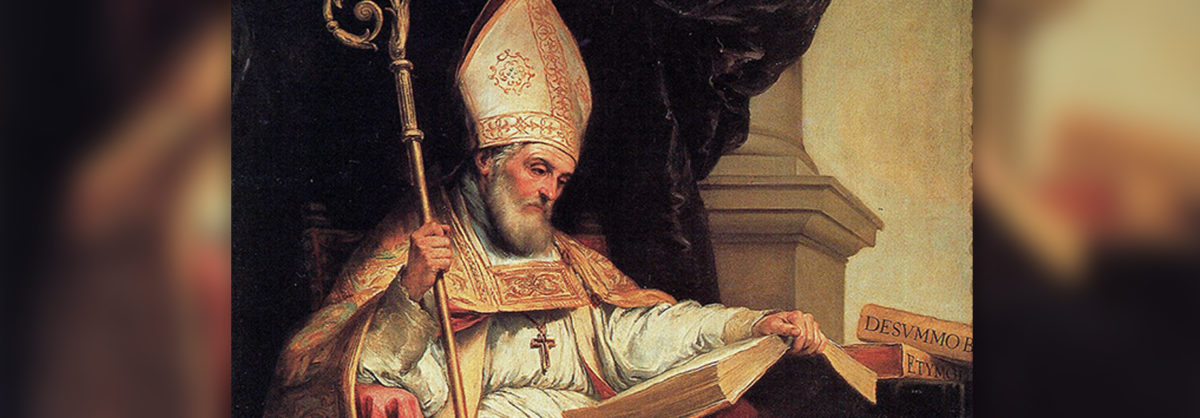
But did you know that the modern concept of something like an encyclopedia or the internet as an all-encompassing source of information has its roots in ancient Catholic history? On April 4, we celebrate the feast day of St. Isidore of Seville, born in 560 AD, a Doctor of the Church and one who is sometimes called the “last scholar of the ancient world.”
San Isidoro fue el primer cristiano que intentó crear una compilación de todo el saber conocido por el hombre, obra conocida como el Etymologiae. His book included not only summaries and digests of religious works and information, but secular knowledge as well. As such, Isidore’s “Etymologiae”—life’s accomplishment—is regarded as a precursor to more modern compilations like encyclopedias and the internet. For this reason, Pope John Paul II named Isidore the patron saint of the Internet and, in a Audiencia general de 2008El Papa Benedicto XVI dijo de San Isidoro:
“The wealth of cultural knowledge that Isidore had assimilated enabled him to constantly compare the Christian newness with the Greco-Roman cultural heritage, however, rather than the precious gift of synthesis it would seem that he possessed the gift of collatio, that is, of collecting.”
Collecting, preserving, and organizing general knowledge is an essential part of education, and St. Isidore’s Etymologiae influenced generations of scholars from the Middle Ages through the Renaissance. St. Elizabeth Ann Seton surely would have appreciated this great saint’s commitment to preserving knowledge with the goal of educating future generations.
Education was a cause near and dear to the heart of Mother Seton. Throughout her comparatively brief lifetime, she was devoted to providing access to education for those most deemed unworthy of education—poor, young girls who had few options for success in the world. The school she began, St. Joseph’s Academy and Free School, which welcomed impoverished young girls and offered them a free education, was the first of its kind in the United States. St. Joseph’s Academy helped inspire was to become the American system of Catholic education which today serves over 2 million students, including many from disadvantaged families.
Though my parents long ago disposed of their collection of encyclopedias, I recently discovered that the Encyclopedia Britannica survives to this day in the form of a website instead of volumes of books. I was interested to read its description of St. Isidore’s Etymologiae: “an encyclopedia of human and divine subjects, was one of the chief landmarks in glossography (the compilation of glossaries) and was for many centuries one of the most important reference books.”
También disfruté leyendo la entrada de Santa Isabel Ana Seton which states that “Mother Seton and the sisters moved their home and school to Emmitsburg, Maryland, where they provided free education for the poor girls of the parish—an act later considered by many to be the beginning of Catholic parochial education in the United States.”
A lo largo de la historia, la Iglesia católica y muchos de sus grandes santos han sido innovadores en el campo de la educación, especialmente como acto de servicio a los pobres y marginados. Muchas de las escuelas católicas estadounidenses que funcionan hoy en día están patrocinadas por diócesis o fueron fundadas por órdenes religiosas dedicadas a ofrecer oportunidades a los niños que viven en la pobreza.
Mientras la Iglesia continúa hoy la vital labor de la educación, y mientras los padres se dedican a educar a sus hijos en cuestiones de fe, podemos pedir la intercesión de estos dos grandes santos:
San Isidro de Sevilla y Santa Isabel Ana Seton, pioneros en el campo de la educación, ¡rueguen por nosotros!
DANIELLE BEAN es escritora y popular conferenciante sobre la vida familiar católica, la paternidad, el matrimonio y la espiritualidad de la maternidad. Fue editora y redactora jefe de Catholic Digest, y es autora de muchos libros para mujeres, entre ellos Momnipotente, You’re Worth It! y Tú eres suficiente. También es creadora y presentadora del podcast Girlfriends. Más información en DanielleBean.com.
Imagen: Dominio público
Esta reflexión se publicó anteriormente. Para leer todas nuestras reflexiones sobre Seton, haga clic en aquí.