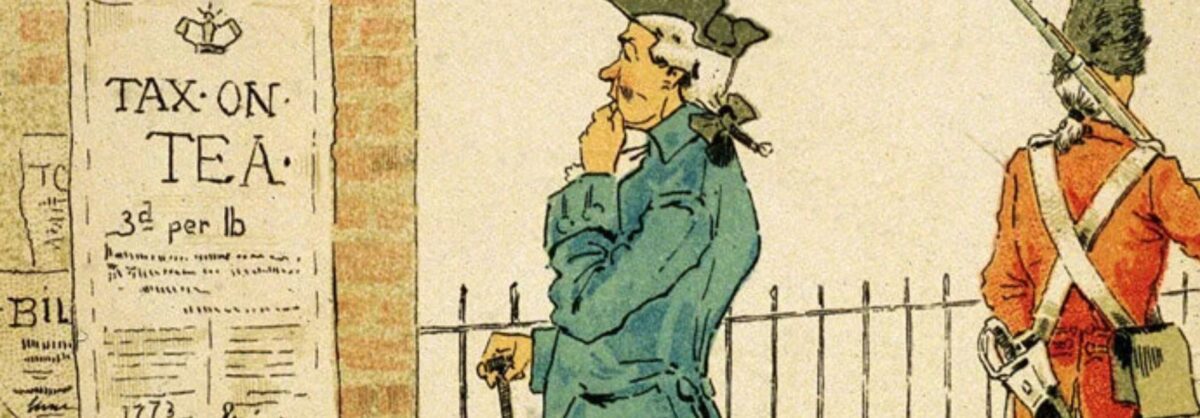

EMMITSBURG, MD (Feb. 19, 2026) – Before America was a nation, before the Boston Tea Party helped spark a revolution, and before Saint Elizabeth Ann Seton became the first native-born American to be canonized, there was tea.
This February 21 and March 7, the National Shrine of Saint Elizabeth Ann Seton will host a special America250 presentation that transports visitors back to the colonial world Mother Seton was born into in 1774, a world shaped by global trade, British rule and domestic rituals like afternoon tea.
“Tea Culture and the American Revolution,” presented by Scott Keefer, Provincial Archivist for the Daughters of Charity, will explores how tea shaped colonial family life, social customs and political identity. Guests will learn how this simple daily ritual, closely associated with British influence, evolved before, during and after the Revolutionary War, offering insight into the world of young Elizabeth Ann Seton.
“Tea offers a revealing window into daily life in late-18th-century America because it sits at the intersection of home, social custom and emerging national identity,” said Keefer. “Looking at tea culture alongside Mother Seton’s life allows us to see how personal history and national history unfolded together. Her story spans the passage from colony to nation, from British influence to American expression and even in something as simple as what was served at the table, we can glimpse that transformation.”
Drawing on archival research and the Seton family’s original tea caddy (still containing 18th-century Bohea tea leaves), the presentation connects a familiar household tradition to the broader forces that shaped early American life. A tea tasting inspired by blends the Seton family likely enjoyed is also included.
“Mother Seton wasn’t born a saint. She was a daughter, a wife, a mother and a widow who turned to God through the challenges of everyday life,” said Rob Judge, executive director of the Seton Shrine. “What makes this program so powerful is how it helps people see that path to holiness begins in the ordinary. Tea was part of her family’s daily routine, and by looking closely at something so simple, we’re reminded that God meets us right where we are.”
The “Tea Culture and the American Revolution” program is part of the Shrine’s America250 initiative, a yearlong series exploring how Mother Seton’s life and legacy reflect the nation’s early identity and ongoing development. Additional programming in 2026 includes a new museum exhibit titled “Do the Good: The Sisters Who Shaped America,” a renewed focus on pilgrimages and continued promotion of the “Saints on Their Way” initiative. The Shrine also continues to build support for its $50 million endowment campaign, themed “A Saint for Our Time,” aimed at ensuring long-term preservation and outreach.
These initiatives build on the Shrine’s existing programming, which includes “Seeds of Hope” retreats for the poor; the annual Sea Services pilgrimage; the “Back from the Dead” cemetery walks, the spring living history program, Academy Alive; and tours of Mother Seton’s historic homes throughout the year.
Space is limited and registration is required for “Tea Culture and the American Revolution.” Reserve your spots for February 21 and March 7 from 3 – 4 p.m. at the Shrine.
Mother Seton: An American Story
Elizabeth Ann Bayley was born in New York City on August 28, 1774 to a prominent Episcopal family. Her father, Richard Bayley, was a New York physician and the first chief health officer of the city. In 1794, she married the wealthy businessman William Magee Seton, with whom she had five children. As a couple, the Setons socialized with Alexander and Eliza Hamilton and other well-known political and business leaders of the era.
Eventually, William Seton’s business crumbled and he developed tuberculosis. In an attempt to improve his health, he and Elizabeth sailed to Italy, but he died there in 1803. After discovering Catholicism in Italy, Elizabeth Ann Seton returned to the United States and entered the nascent Catholic Church in 1805 in New York.
After some difficult years, she moved to Baltimore in 1809 at the invitation of Archbishop John Carroll, America’s first bishop, who urged her to start the first free Catholic school for girls in Emmitsburg. He also approved her founding of the Sisters of Charity of St. Joseph’s the first community for apostolic religious women established in the U.S. Mother Seton died in 1821, and in 1975 she was the first native born American to be canonized a saint in the Catholic Church.
For more information about the Shrine, please visit setonshrine.org.
The National Shrine of Saint Elizabeth Ann Seton
The National Shrine of Saint Elizabeth Ann Seton in Emmitsburg, Md., is a place of God and of history, where 70,000 visitors a year walk in the footsteps of a saint. The Shrine offers pilgrims prayerful comfort from Mother Seton’s story and her intercessions as a friend in heaven. It is an active Basilica and has a wide range of historical buildings and programs that show what life was like when Mother Seton lived here more than 200 years ago. It was here that she founded the first community of religious women established in the U.S., created the first free Catholic school for girls staffed by sisters in the U.S. and fulfilled her mission of serving those in need. Today, her legacy includes several religious communities with thousands of sisters, who serve others through schools, social service centers and hospitals throughout the world. She was canonized in 1975. Her remains are entombed at the National Shrine that bears her name. For more information, please visit https://setonshrine.org/.
# # #